Nusantara: Building a Capital, Creating a Market
The relocation of Indonesia’s capital to Borneo is the largest infrastructure program in Southeast Asia. This briefing maps the investment corridors, timeline risks, and early-mover advantages.
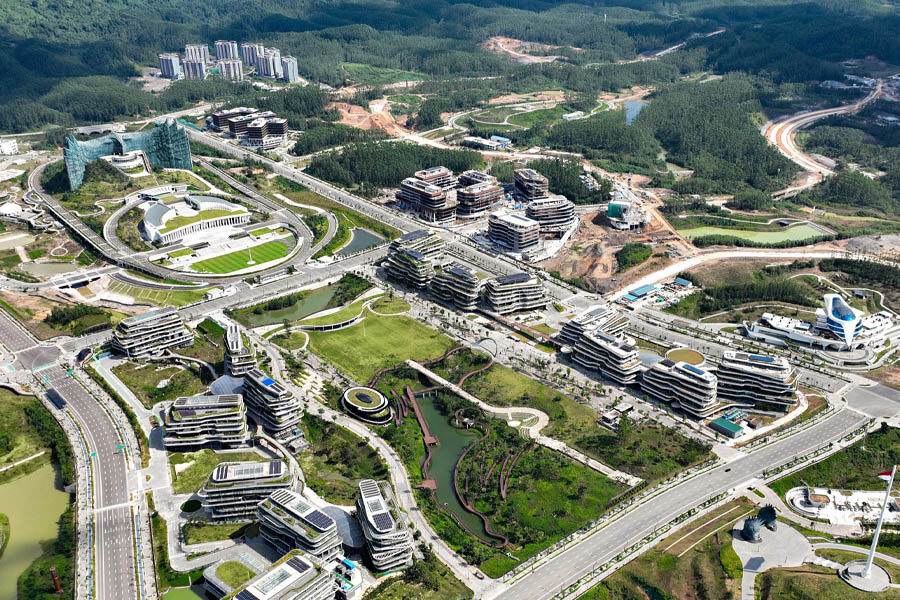
Indonesia’s new capital, Nusantara, is no longer simply a long-term vision. It is becoming an emerging economic ecosystem—one that combines government infrastructure, private investment, new urban development, and the creation of an entirely new market.
For international investors, the opportunity is significant. But so is the complexity.
Nusantara is being built not simply as a new administrative center, but as a new city designed around sustainability, technology, connectivity, and economic activity. The Indonesian government has reaffirmed its commitment to the project, with the development of Nusantara targeted to support its role as Indonesia’s political capital by 2028.
The central investment question is therefore changing.
It is no longer simply:
“Will Nusantara be built?”
It is:
“What markets, infrastructure, and economic ecosystems will emerge as Nusantara is built—and where should investors position themselves?”
From Capital Relocation to Market Creation
The most important way to understand Nusantara is to look beyond the government buildings.
A capital city creates demand.
Government institutions require offices, housing, transportation, telecommunications, healthcare, education, hospitality, retail, utilities, security, digital infrastructure, and a wide range of professional services.
As people and institutions move, a broader ecosystem follows.
This makes Nusantara different from a conventional infrastructure project. Its development has the potential to create a new concentration of economic demand in East Kalimantan.
The investment opportunity therefore extends beyond construction.
It includes the businesses and services required to make a new city function.
The Investment Corridors
Nusantara’s opportunity can broadly be understood through several interconnected investment corridors.
1. Urban Infrastructure
The foundational opportunity remains infrastructure.
Roads, utilities, water systems, public facilities, transportation, telecommunications, and other urban infrastructure are essential to the development of a functioning capital.
The government is continuing infrastructure development through a combination of public funding, public-private partnerships, and private investment.
For investors, this creates opportunities not only in construction, but also in engineering, technology, infrastructure services, operations, and maintenance.
2. Residential and Commercial Development
A functioning city needs people—and people create demand.
Residential development, commercial districts, hospitality, retail, food and beverage, offices, and supporting services are already emerging as part of the Nusantara ecosystem.
As of May 2026, the Nusantara Capital Authority reported estimated investment of Rp72.39 trillion, consisting of Rp60.29 trillion in private investment and Rp12.10 trillion in public facilities and government assignments. The authority reported 75 cooperation agreements involving 65 private-sector businesses.
This is an important signal.
The market is beginning to move from building the city toward operating the city.
3. Technology and Smart City Infrastructure
Nusantara’s ambition is closely connected to digital infrastructure and smart-city development.
The city is being designed around integrated technology, sustainability, and digital services. In February 2026, the U.S. Government, through the U.S. Trade and Development Agency, provided a US$2.49 million grant for technical assistance supporting Nusantara’s Smart City Blueprint.
This creates potential opportunities across:
-
data centers;
-
cloud infrastructure;
-
connectivity;
-
cybersecurity;
-
digital government;
-
smart mobility;
-
urban technology;
-
artificial intelligence; and
-
integrated city-management systems.
For technology companies, Nusantara may therefore become more than a geographic market. It can become a testbed for new urban technologies in Indonesia.
4. Government and Institutional Ecosystem
The relocation of the capital creates a unique institutional demand.
Nusantara is expected to accommodate an increasing presence of government institutions and civil servants. Under the government’s current plan, Nusantara is targeted to become Indonesia’s political capital in 2028, with the gradual relocation of civil servants supporting that objective.
This creates demand for an ecosystem around government activity—including professional services, hospitality, housing, transportation, healthcare, education, security, and other institutional services.
For companies operating in these areas, proximity to the emerging institutional ecosystem may become strategically valuable.
The Timeline Risk
For investors, Nusantara’s opportunity must be considered alongside its timeline.
Large-scale capital relocation is inherently complex.
The development involves multiple infrastructure packages, government institutions, private investors, financing structures, regulatory processes, and construction timelines.
The government’s current policy direction targets Nusantara as a political capital by 2028. At the same time, major components of the legislative and judicial complexes are targeted for completion during 2027–2028.
This means investors should not treat 2028 as a single completion date.
Nusantara is better understood as a sequence of development phases.
Some opportunities become investable before others.
Some markets depend on population growth.
Others depend on infrastructure completion.
Still others depend on government relocation and the emergence of sufficient commercial demand.
The critical question is therefore not simply when Nusantara is completed, but when each individual market reaches sufficient scale to become commercially viable.
Early-Mover Advantage
Early entry can create significant advantages—but only when supported by the right strategy.
Being early can allow investors to:
-
secure strategic locations;
-
establish relationships with relevant institutions;
-
shape emerging market standards;
-
build partnerships with local companies;
-
understand regulatory developments before competitors;
-
establish brand presence before demand matures; and
-
participate in the development of new economic ecosystems.
But being early also means accepting greater uncertainty.
Land, infrastructure, regulation, demand, financing, and project sequencing can all affect investment outcomes.
Early movers therefore need more than capital.
They need information, local understanding, institutional relationships, and the ability to navigate change.
The Role of Government
Nusantara is fundamentally a government-led development project.
That means investors cannot evaluate opportunities solely through conventional commercial analysis.
Government policy, institutional priorities, infrastructure planning, land arrangements, regulatory frameworks, and public-sector decisions can materially influence the timing and viability of private investment.
Understanding the institutional landscape is therefore critical.
The relevant question is not simply which agency approves an investment.
It is understanding which institutions shape the environment in which that investment will operate.
This is precisely where local institutional knowledge becomes valuable.
Beyond the KIPP
One of the most important strategic considerations is to look beyond the Kawasan Inti Pusat Pemerintahan (KIPP).
The central government area is the symbolic heart of Nusantara, but a functioning city requires a much broader ecosystem.
The opportunity extends into surrounding development areas, connectivity corridors, logistics, housing, commercial activity, services, and the wider East Kalimantan economy.
Investors should therefore think in terms of corridors and ecosystems, rather than isolated projects.
A successful investment may depend not only on what happens at the project site, but also on:
-
access to transportation;
-
proximity to population centers;
-
availability of utilities;
-
connectivity to Balikpapan and surrounding areas;
-
government presence;
-
supply-chain access; and
-
the development of complementary businesses.
What Investors Should Watch
For organizations considering Nusantara, several indicators deserve close attention.
- Government Relocation
The pace at which government institutions and civil servants move will influence the timing of demand across the city.
- Infrastructure Delivery
Roads, utilities, water, telecommunications, and public infrastructure will determine the practical viability of commercial development.
- Private Investment Conversion
Signed agreements are important, but actual construction and operational activity provide a stronger indication of market maturity. In July 2026, for example, a Chinese foreign-invested company began construction on a Rp1.25 trillion integrated development project in Nusantara—the first construction project in IKN by a foreign-invested company reported by the Nusantara Capital Authority.
- Regulatory Direction
Investors should monitor changes affecting land, investment structures, licensing, incentives, development rights, and other regulatory considerations.
- Ecosystem Formation
The strongest signal may ultimately be the emergence of a self-sustaining economic ecosystem—not simply the completion of government buildings.
The Strategic Opportunity
Nusantara should not be viewed only as Indonesia’s new capital.
It should be understood as an economic development platform.
The city is being built at the intersection of government, infrastructure, technology, investment, and regional economic development.
For international organizations, this creates a rare opportunity to participate in the formation of a new market from an early stage.
But the opportunity is not without risk.
The winners are unlikely to be determined simply by who enters first.
They will be determined by who understands the market early, identifies the right opportunity, builds the right institutional relationships, and remains positioned as the ecosystem develops.
AMANTRA Perspective
At AMANTRA, we believe that opportunities in Indonesia are best understood through the intersection of market intelligence, institutional knowledge, government engagement, investment facilitation, and trusted relationships.
Nusantara exemplifies this approach.
For an international organization, understanding the project is only the beginning.
The deeper questions are:
- Where is the market going?
- Which institutions shape its development?
- Which investment corridors are likely to mature first?
- What risks could affect timing and execution?
- And where can an early position create a sustainable advantage?
Nusantara is being built today.
The market it creates will develop over decades.
For organizations prepared to understand Indonesia at that level, the opportunity is not simply to invest in a new capital.
It is to participate in building a new economic ecosystem in Indonesia.